


As a parent, your number one priority is likely the physical, emotional and mental safety of your child. A nurturing environment which guarantees safety and comfort is paramount to your child’s development, and your peace of mind as a parent.
At Tiddlywinks, we take child safeguarding incredibly seriously. Your child’s wellbeing is at the core of our ethos and nursery curriculum, and we go above and beyond to ensure a welcoming, inclusive and safe setting for all children. This includes noticing for signs of abuse outside of our nurseries too.
What nursery safeguarding actually means

Safeguarding is the action we take to protect children from harm and promote their welfare. In a nursery, safeguarding refers to the physical, mental and psychological protection of children. This should be a proactive process which defends against abuse, neglect and harm of any kind.
Nursery safeguarding extends beyond the walls of our sites too. At Tiddlywinks, safeguarding is a proactive responsibility. Our staff are trained to recognise and respond appropriately to any signs that a child may be at risk of abuse, neglect or harm. This includes concerns that may arise both within and outside of the nursery environment.
Understanding Ofsted reports often helps parents get an overview of how effectively a nursery implements safeguarding policies.
Tour a Tiddlywinks Nursery
Book in TodayWhy is safeguarding in early years settings so important?
Early years safeguarding is so important because children and babies are particularly vulnerable.
Children often lack the language and communication skills needed to properly describe how they feel and advocate for themselves. They also sometimes lack the required context to understand that what they’re experiencing may not be ‘normal’.
Responsible safeguarding, and spotting signs of mistreatment early, allows for the necessary early intervention to ensure your child doesn’t experience any long-term developmental damage.
How we follow safeguarding legislation and guidance in the UK
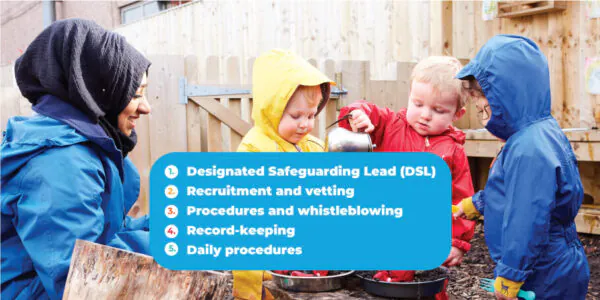
Following nursery safeguarding legislation and guidance in the UK includes strictly adhering to the Early Years Foundation Stage (EYFS) framework. These regulations apply specific duties in relation to staff recruitment, training and child protection procedures (learn more about how we apply the EYFS frameworks into our curriculum).
It also includes applying the following standards:
- Designated Safeguarding Lead (DSL) – We have trained Designated Safeguarding Leads who oversee safeguarding practices across the nursery, provide support and guidance to staff, and liaise with external agencies where necessary. All safeguarding training is regularly reviewed and updated to ensure staff remain informed of current legislation and best practice.
- Recruitment and vetting – All new members of staff undergo comprehensive background checks, including DBS checks and independent references from previous trusted employers or educational institutions. This is then followed by a comprehensive induction programme, ensuring every team member understands their safeguarding responsibilities and our high standards of care from day one.
- Procedures and whistleblowing – We maintain and apply a number of written policies which cover aspects such as safe use of mobile phones, cameras and devices, as well as dealing with all allegations seriously, no matter the severity. We also have clear policies which all staff are trained in, outlining what to do if there are concerns about other staff members.
- Record-keeping – We also comply with general GDPR laws by recording and storing injuries or concerns with safeguarding (our data protection compliance report).
- Daily procedures – We keep daily attendance logs, following up on unexplained absences. On top of this, we keep track of allergies, and encourage healthy eating.
Booking a nursery viewing and asking the right questions is a great way to understand more about specific safeguarding concerns.
How our staff protect your children at nursery
Our staff work individually and together to protect your children to the best of their ability by closely following safeguarding procedures and protocols.
Our thoroughly vetted staff are trained in noticing signs of abuse, and encouraging children to explore and learn safely and comfortably. We also have first-aid trained staff, ready to jump in and apply medical assistance to children when needed, and maintain strict ratios between adults and children to ensure proper monitoring and supervision during play and learning.
Members of staff vigilantly look out for warning signs such as:
- Physical indicators
- Behavioural shifts
- Fear of surroundings
- Developmental regression
- Inappropriate knowledge/language use
- Changes in attendance patterns or engagement
- Concerns raised by the child, family members or other professionals
How often do our nursery staff team attend child protection training?
To guarantee child protection, our staff are comprehensively trained. All members of our team receive safeguarding and child protection training as part of their induction, ensuring they understand their responsibilities from the very beginning of their role.
Safeguarding training is regularly reviewed and updated to ensure staff remain informed of current legislation, best practice guidance and emerging risks. In addition, our Designated Safeguarding Leads undertake advanced safeguarding training and provide ongoing support and guidance to the wider team.
Alongside formal training, we hold regular staff meetings, safeguarding discussions and policy updates to ensure safeguarding remains at the forefront of our practice every day.
Book a viewing of a Tiddlywinks nursery to learn more about our approach to safeguarding and education.
View our Nurseries
Speak to Us